Your office moves. Your work doesn't stop.
Moving an office is not like moving a home. Every hour your team cannot work costs you money, and every lost file or missing cable becomes someone's headache on Monday. So we plan your office move around your business, not around our truck.
We pack and move desks, computers, servers, files and furniture in a fixed order, usually after working hours or over a weekend. Then we set up the new office desk by desk, so your people walk in, find their seat and start working.
- Night and weekend moves
- Desk-by-desk labelling
- GST invoice
One coordinator from you. One move manager from us.
Office moves go wrong when too many people give instructions. The accounts head wants one thing, the IT person wants another, and the movers do not know whom to listen to. So we ask you to name one office coordinator. This can be your admin manager, office manager or even the founder in a small team. That person talks to one move manager from Lifter Shifter, and every decision goes through the two of them.
Planning starts with a visit to both offices. We count desks, chairs, cabinets, computers and boxes of files. We check the stairs, lifts, corridors and parking at each building. Then we sit with your coordinator and agree on the move date, the hours we will work, the order in which teams move and who signs off at each stage.
All of this goes into a written move plan and a written quote. Your coordinator shares the plan with staff, and everyone knows what to expect. No guesswork on moving day.
Every box knows which desk it belongs to
The biggest time-waster after an office move is searching. Whose monitor is this? Where did the HR files go? Which chair belongs to the reception? We stop this before it starts with a simple system of colours and numbers.
Your coordinator shares the new floor plan, even a hand-drawn one is fine, and tells us who sits where. Each department gets a colour, and each desk gets a number. Sales might be blue, accounts green and the design team orange. Everything from desk 14 in accounts, the CPU, monitor, keyboard, drawer contents and chair, gets the same green label with "A-14" on it.
At the new office, we stick matching labels on each seat and room before unloading begins. Our team simply matches label to label. Common items like the pantry, printers and meeting room get their own tags too, so nothing ends up in the wrong corner.
- S-07Sales team, desk 7, box 2 of 3
- A-14Accounts, desk 14, CPU and monitor
- D-03Design team, desk 3, chair
- IT-R1Server room, rack 1, sealed
- MR-1Meeting room 1, table parts
Computers, servers and cables, packed the careful way
Your computers hold your work. We take care of the physical side: packing, carrying and placing. Your own IT team or IT vendor should take care of the digital side: backups, shutting down servers, and setting up the network at the new office. Please bring them into the plan early. We agree the timing with them, so nobody is waiting on anybody.
A good rule: the day before the move, your IT team takes a full backup, lists every device with its desk number, and photographs the cable setup behind important machines like the server and the reception system. Those photos make reconnecting at the new office much quicker.

Desktops and monitors
Each monitor is wrapped in bubble wrap and packed standing up. CPUs go in padded cartons. Both carry the same desk label, so the pair reaches the same seat.
Cables and small parts
Keyboards, mice, chargers and power cables go into a zip bag marked with the desk number. No more tangled heap of wires on the new office floor.
Servers and network racks
Only after your IT team has backed up data and shut the server down do we touch it. It moves with extra padding, upright, and travels first or last as your IT team prefers.
Printers, UPS and laptops
Toner is removed from printers before packing. UPS batteries are packed flat and kept dry. We ask staff to carry their laptops home, since a laptop is safest with its owner.
Confidential files stay sealed, from the old cabinet to the new one
Every office has papers that only a few people should see: salary records, signed contracts, client files, patient records in a clinic, or legal documents. Our team does not read, sort or open these. We ask your staff to pack confidential papers themselves, or to stand with us while we pack them.
Each confidential carton is sealed with tape in front of your staff and given a number. We write the list of numbers on a sheet, and your coordinator keeps a copy. These cartons travel together in one part of the truck, and at the new office they are handed only to the person you name. That person counts them and signs.
Filing cabinets with locks can often move with files inside, which saves hours. We check the cabinet's condition first, lock it, and keep the keys with your coordinator. A moving day is also a good time to clear out old papers. Decide early what to keep, what to store and what to shred, so you are not paying to move files nobody needs.
Friday evening: old office. Monday morning: everyone at their desk.
For most businesses, the best time to move is when nobody is working. We can start packing on a Friday evening once your team has logged off, move through Saturday, and finish the setup by Sunday. On Monday, your team walks in to a working office. If your business runs six days a week, we can work through the night or on a public holiday instead.
Larger offices can move in phases, one department at a time. Store rooms and old records go first, during the week. Working desks go last, in the final night. That way, your sales team can keep calling clients while accounts is already moving. Your move manager will tell you if night or holiday work adds any extra cost, in writing, before you book.
Taken apart carefully. Put back together properly.
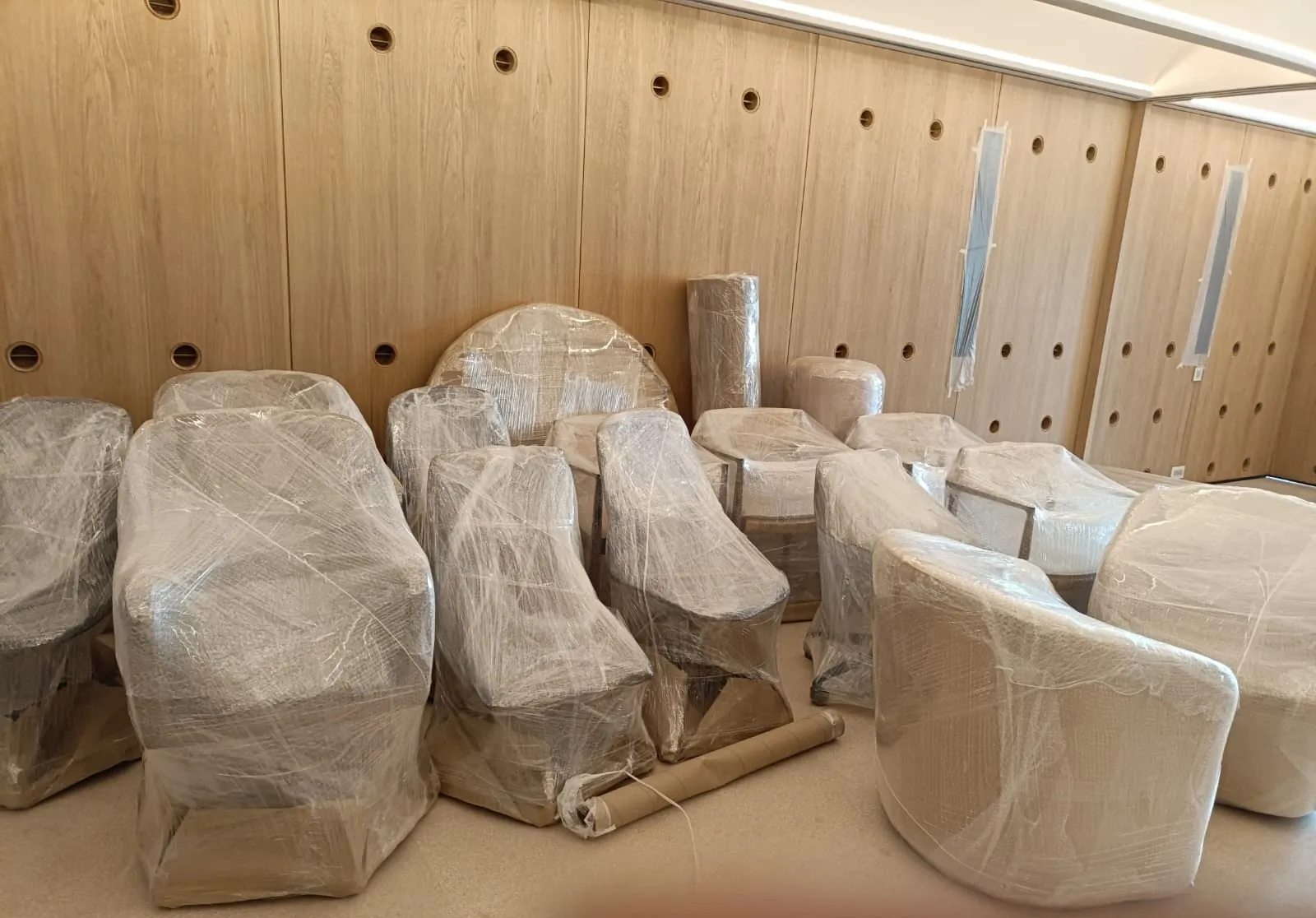
Office furniture is big, heavy and often fixed together in long rows. Most of it will not fit through a door or into a lift in one piece. Our team brings the tools to dismantle it, protect it and fit it back together at the new office.
Linear workstations
Long desk rows are opened panel by panel. Every panel, leg and bracket is marked, and screws go into labelled bags taped to the main piece, so the rows go back in the same order.
Conference tables and cabins
Big tables are opened where possible and wrapped in foam and stretch film. Glass tops travel separately in thick padding, standing on edge, never lying flat under other items.
Chairs, cabinets and almirahs
Office chairs are wrapped and labelled to their desk. Steel almirahs and storage cabinets are emptied or locked, padded on all corners and carried on trolleys to protect floors.
Safes and heavy items
A heavy safe may need extra hands, lifting gear or a stair plan. We spot these during the site visit and plan for them, so they never become a surprise on moving day.
Buying new furniture for the new office? Tell us the delivery date. Our team can unpack and assemble new workstations and chairs alongside the old ones, so you are not waiting a week for a separate fitter while staff sit on boxes.
Two buildings, two sets of rules. We plan for both.
Most office buildings, IT parks and malls have rules about when and how goods can move. If nobody checks these early, a truck can end up waiting at the gate for hours. Your move manager makes a list of what is needed at both the old and new building, and helps your coordinator get each approval in time.
Rules are different in every building, so we always check with the building management directly instead of guessing.
Do not forget the old office handover. Your landlord may want the space empty and clean before returning keys or settling the deposit. We remove all packing waste and can take away furniture you are leaving behind, so the old office is handed back in good shape.
Goods lift booking
Many buildings give the service lift for moving only at fixed hours. We book a slot that matches our plan at both ends.
Loading bay and parking
We check where the truck can stand, how long it can stay and whether a smaller vehicle is needed for a narrow lane.
Security passes and gate permits
Our crew list and vehicle number are shared in advance, so passes are ready and the guard is expecting us.
Floor and wall protection
Some buildings ask movers to cover lift walls and common floors. We bring sheets and corner guards as standard.
What a weekend office move looks like
Every office is different, but most weekend moves follow this shape. Exact hours depend on your size and your building's rules, and your move manager will share a timeline made for you.
-
1
The week before
Store rooms, old records and spare furniture are packed. Labels are stuck at the new office. Staff get a short note on what to clear from their desks.
-
2
Friday evening
After the team logs off and your IT team shuts down systems, we pack working desks, computers and cables, desk by desk.
-
3
Saturday
Furniture is dismantled, everything is loaded and moved. Unloading starts at the new office, one department at a time, following the floor plan.
-
4
Sunday
Workstations are fitted, computers placed at each desk, and your IT team connects the network. We walk the floor with your coordinator and clear the packing waste.
Monday in the new office should feel like a normal Monday
When your team walks in, each person should find their desk, their chair, their computer and a small box of their own things waiting for them. Cables are in their labelled bag, ready to plug in. The pantry has its boxes, the printer is in its corner and the meeting room table is standing.
Before we leave on Sunday, your coordinator walks the floor with our supervisor, checks the box count against our list and signs off. Anything that does not look right is fixed then and there, not left for Monday.
Small problems still come up on a first day. A drawer key goes missing, a chair is at the wrong desk or a cabinet needs to sit against a different wall. You can ask for a few of our team members to be present on the first working morning to fix these quickly. Just tell us while planning.
A simple tip: ask your coordinator to send a short message to staff on Sunday evening with the new address, parking details and entry process. People reach on time, and the day starts calmly.
Small office, full floor or shop. The plan fits you.
We size the team, the vehicles and the timeline to your workplace, so you never pay for more than you need.
Small offices and startups
A team of a few people, or leaving a co-working space? One crew and one vehicle can often finish in an evening. We keep it simple and price it for what you actually have.
Large floors and multi-floor offices
Moved in phases with a bigger crew, a supervisor for each floor and a detailed floor plan. Each department gets its own slot, so key teams keep working.
Shops and showrooms
Display racks, counters, glass shelves and stock are packed so you lose as few selling days as possible. We can move after closing time and set up by the next morning.
Clinics and small labs
Examination tables, cabinets and patient files move with extra care. For sensitive medical machines, we follow the handling advice of the maker or your service engineer.
Questions about office moves
These are the questions office managers and business owners ask us most. If yours is not here, call us and we will explain.
Read all questionsHow early should we start planning?
For a small office, two to three weeks is usually enough. For a full floor, start four to six weeks ahead so building approvals and IT planning are not rushed.
Do you set up our computers and network?
We place each computer at its desk with its cables. Connecting the network, servers and software is best done by your IT team or vendor, and we plan our timing around them.
Can you move us at night or on a Sunday?
Yes. Most office moves happen after hours or over a weekend. Any extra charge for this is shown in your written quote.
Will you get the building permissions for us?
We tell you exactly what each building needs and help your coordinator arrange it. Some approvals must come from your company as the tenant, so your coordinator's support is important.
What should our staff do before the move?
Clear personal things from drawers, take laptops and valuables home, and pack their own desk items into the box we give them. We share a one-page note your coordinator can forward.
Do we get a GST invoice?
Yes. Share your company name, address and GST details, and you get a proper invoice for your accounts team.
Can you store old furniture we don't need yet?
Yes. Extra furniture, old files or stock can go into our storage for as long as you need. See storage.
Can you move an office to another city?
Yes. We plan it the same way, with a longer road timeline. If staff are moving too, our corporate relocation service can move their homes.
Moving your office soon? Let's plan it.
Tell us your current and new office address. We will call to fix a site visit and send you a clear written plan and price.