A calm move starts with a simple list.
Most moving stress comes from trying to remember everything at once. This guide breaks your move into small jobs, week by week, so you only think about what matters right now. Tick things off as you go. The boxes on this page are real checkboxes, so you can use it as your working list.
It works whether you book us for the full move or pack some things yourself. Use what helps and skip what does not.
The moving checklist, from six weeks out to your first week in
Six weeks is a comfortable runway, but do not worry if you have less. If your move is two weeks away, start at the two-week card and pick up the most important items from the earlier ones.
Six weeks before
Four weeks before
Two weeks before
One week before
Two days before
Moving day
The first week after
Move less, pay less, unpack faster
Every item you take adds to the packing, the truck space and the unpacking. A simple test helps: if you have not used it in a year and it has no special meaning, it probably does not need to travel. Make three piles in each room and decide quickly. Do not wait until the last week, when every choice feels harder.
Sell
Old sofas, extra beds, a second fridge or a cooler you will not need in the new city. List them online or in your society group a month ahead, with clear photos and a fair price.
Donate
Clothes, toys, books and utensils in good condition can help someone else. Offer them to your domestic help, building staff, a local NGO or a temple or gurudwara collection.
Discard
Old newspapers, broken gadgets, expired medicines and dried paint. Give paper and metal to the kabadiwala, and old electronics to an e-waste collection point.
One box that makes the first night easy
On the first night, you will be tired and surrounded by sealed cartons. You do not want to open ten boxes to find a towel. Pack one box with everything you need until the next morning, mark it in big letters, and ask the team to load it last so it comes out first. On a long move, carry it with you in the car or as luggage.
- Phone chargers, power bank, extension board
- Daily medicines and a small first aid kit
- Bedsheets, pillows and a light blanket
- Towels, soap, toothbrushes, toilet paper
- A change of clothes for everyone
- Kettle, tea, sugar, a few cups and plates
- Drinking water, biscuits and dry snacks
- Torch, scissors, box cutter, small toolkit
- Your child's favourite toy or night light
- Pet food, bowl and leash
- A small diya or idol for a simple puja
- Cleaning cloth and a broom for a quick sweep
Where to update your new address
You do not have to do all of this in one week, but the sooner you start, the fewer letters and OTPs go to the wrong place. Rules and steps change from time to time, so always check the official website or office of each one before you apply. Keep your rent agreement or a utility bill for the new home ready, since many of them ask for address proof.
Bank accounts
Update your address through net banking or at your branch, so cheque books, cards and letters reach you. If you moved city, you can ask to shift your account to a branch near your new home.
Aadhaar
Address updates can usually be requested online with a valid address proof, or at an Aadhaar centre. Many other services use your Aadhaar address, so this one is worth doing early.
PAN and tax records
Check that the address in your PAN and income tax records is current, so tax letters reach you. Update it through the official portal if needed.
Gas connection
Talk to your gas distributor before you move. Depending on where you are going, you may transfer the connection or surrender it and apply again. Keep every paper they give you.
Broadband and DTH
Ask if your provider serves the new address. If yes, book the shift so the router works soon after you arrive. If not, close it and return any device they gave you.
Electricity and water
Give a final meter reading at the old home and ask about any deposit refund. At the new home, check whose name the connection is in and how to pay the bill.
Voter ID
If you moved to a new constituency, apply to shift your name to the voter list there so you can vote near your new home.
Insurance policies
Update your address on health, life and vehicle insurance. For your car or bike policy, the new city may also change a few details, so ask your insurer.
Moving with kids, elders, pets and plants
Furniture does not mind being moved. People and pets do. A little planning for them makes the whole day calmer for everyone.

Children
Tell them early and show them photos of the new home and school. Let them pack one box of their own things and decorate it. On moving day, a grandparent's or friend's house is often better than a home full of cartons. Set up their room first, so bedtime feels normal on the first night.
Elderly parents
Keep their medicines, prescriptions and doctor's records in a bag they carry. If the trip is long, book a comfortable train or flight and let them reach after the house is set. Ask them which things matter most, like a puja shelf or a favourite chair, and set those up first.
Pets
Pets never travel in the goods truck. Visit the vet a week before for a check-up and, for long trips, a health certificate. On moving day, keep your pet in one quiet room with the door shut. Update the tag on its collar with your new number and address.
Plants
Potted plants usually manage a local move well. Long trips in a closed truck are harder on them, so ask your move manager whether plants can go on your route. Water them two days before, not on the day, and trim dead leaves. Big, heavy pots may be better gifted to a neighbour.
Packing tips if you pack yourself
Many people pack clothes, books and personal things themselves and leave furniture, glass and electronics to us. That works well if the boxes are packed the right way. These simple habits make the difference.
Small boxes for heavy things
Books, files and steel utensils go in small boxes. A big box full of books is too heavy to lift safely and often tears at the bottom.
Heavy at the bottom, no gaps
Put heavy items at the bottom and lighter ones on top. Fill empty space with towels or paper so nothing slides around inside.
Label two sides, not the top
Write the room and the main contents on two sides. When boxes are stacked, the top is hidden, but the sides are always visible.
Plates stand on their edge
Wrap plates one by one and pack them standing up, like files in a rack. They break far less this way than when laid flat in a pile.
Keep screws with the furniture
When you open a bed or table, put the screws and bolts in a zip bag and tape it to the same piece. Lost screws slow down setup more than anything.
Use suitcases and bags
Clothes travel well in suitcases and soft bags, which saves cartons. Keep liquids like oil and ghee sealed and in a separate box.
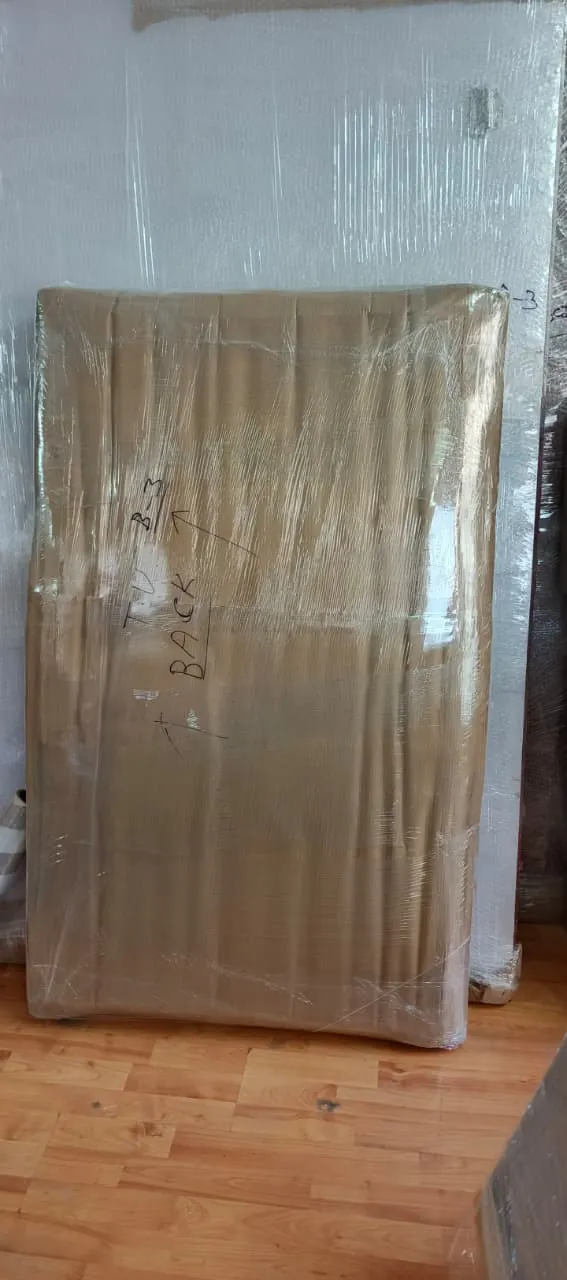
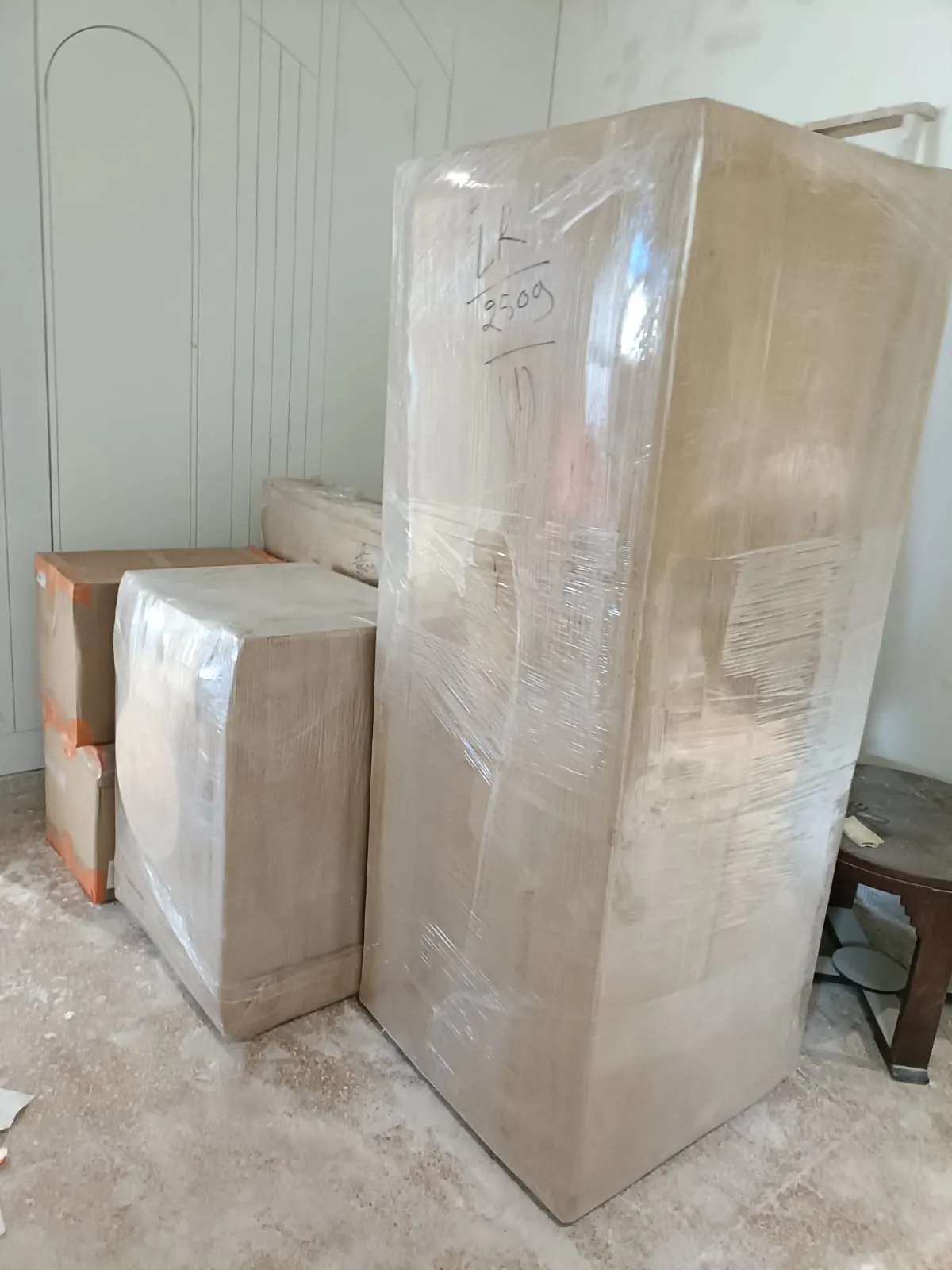
First chai in the new kitchen. That is when it starts to feel like home.
Making the new place feel like home
Before you unpack anything, check the basics: water in every tap, power in every room, the main switch, the gas line and the lock on the main door. If something does not work, tell the owner or the society office the same day, while you are still waiting on boxes anyway.
Then unpack in a simple order: kitchen, bedrooms, bathrooms, and only then the living room and the rest. A working kitchen and a made bed take care of most of the tiredness. Wait a few hours before switching on the fridge after it reaches, and ask our team if you are unsure about any appliance.
Next, get to know the neighbourhood. In the first few days, find the nearest chemist, a clinic or hospital, the kirana store, a vegetable vendor and an ATM. Save the numbers of the society office and the security desk. Ask to be added to your building's WhatsApp group, where most notices and local tips are shared.
Say hello to your neighbours, even if it is only a short chat in the lift or a small box of sweets. If you hire new domestic help, ask your society or local police station about the verification process. Small steps like these turn a new address into a place you belong.
Let us take some jobs off your list
Any item on this checklist that feels like too much, we can probably do for you.
Questions about planning a move
Short answers to the planning questions we hear most. For anything else, your move manager is a call away.
Read all questionsMy move is in ten days. Is that too late?
No. Start with the two-week card, book your mover first and pick the most important items from the earlier cards. Short-notice moves are common.
Will my ticks on this page be saved?
The checkboxes are for use while the page is open. If you want a lasting list, print the page or copy the items into your notes app.
What should I never pack in the truck?
Cash, jewellery, important papers, laptops, daily medicines, and anything flammable like gas cylinders with gas, petrol or fireworks.
Can I pack some boxes and leave the rest to you?
Yes. Tell us what you will pack. We check your boxes on the day and add tape or padding where needed.
How do I get the society NOC?
Ask your society office or secretary. Most need clear dues and a few days' notice. Your move manager can tell you what is usually asked for.
What if something is damaged?
Take photos and tell your move manager within 48 hours. If you took transit insurance, we help you with the claim.
Do you take away the empty cartons?
Ask when you book. If you would like to keep some for storage, just tell the team before they leave.
Checklist ready? Let's book the move.
Tell us where you are going and when. We will call back with a clear written price, and take as many jobs off your list as you like.